Cimitero Monumentale (Monumental Cemetery), Northeast Milan
Carlo Maciachini built the Monumental Cemetery between 1863 and 1866. The 250,000 m2 cemetery grounds are home to an eclectic assortment of memorial headstones, sculptures and monuments.
Hiking the rugged mountainous shore of Lake Como.
The Via dei Monti Lariani is the 125km Lombardy section of the Sentiero Italia - a hiking trail that traverses Italy. The route starts at Cernobbio near the southern tip of Lake Como's western arm and follows a necklace of hamlets (many former pastural settlements where farmers grazed their animals) along the lake's western shore as far as Sorico, the lake's northern tip. The route contours the mountains at an altitude of between 600 and 1200 metres and can be accessed with normal walking gear. It is an itinerary of striking natural beauty, geographical and historical interest and with paths of varying ruggedness. The trail, established and maintained by the Como branch of CAI (the Italian Alpine Club) is fully signposted and divided into four sections.
Carlo Maciachini built the Monumental Cemetery between 1863 and 1866. The 250,000 m2 cemetery grounds are home to an eclectic assortment of memorial headstones, sculptures and monuments.
Located in the very heart of the city, the Duomo is the third largest cathedral in the world and Milan's most famous cultural landmark. Commenced in 1386, the cathedral was initially built in terracotta stone then continued in the white Condoglian marble (shipped from Lake Maggiore) that gives the building its striking crystalline beauty.
'Arengario' derives from the Latin arengarius which means 'gathering place'. Situated very close to the cathedral, its presence symbolised the continuous fight for power among the religious and civil forces of Monza.
The Castello Sforzesco incorporates a whole host of museums inside with exhibitions that range from prehistoric and Egyptian archaeological materials to paintings, sculptures, photographs, drawings, manuscripts, furniture, musical instruments, stamps, coins, medals and much more.
This basilica, probably dating back to the end of the 4th and the beginning of the 5th century, was largely rebuilt in the 11th and 12th centuries and again in the 16th century. It also houses a chapel - Capella Sant'Aquilino - which still features mosaics dating back to the 5th century.
The Ambrosian Library & Art Gallery, named after Ambrose the patron saint of Milan, opened in 1618 and is the city's oldest museum. The beautiful palace, as well as the world-class collections of paintings, manuscripts and books are well worth a visit.
The elegant style and furnishings, the neoclassical pieces of art decorating the walls and the hand-painted high ceiling is a dramatic yet fitting setting for the fantastic food of the Palazzo Parigi restaurant. And when the weather is fine, the relaxed atmosphere of the private garden terrace provides an alternative atmosphere for visiting diners.
The 2-Michelin-starred Seta restaurant located in the Mandarin Oriental Milan hotel is a new kid on the block for the Milanese restaurant scene. An open-plan kitchen gives guests a peak of how the stunning dishes are prepared and a more complete experience to their choices.
Il Baretto has been running for over fifty years, delighting the great and the good of the city for half a century. The sophisticated, old English club house decor is host to a refined menu taking cues from Milanese and international cuisine.
Part of the Armani Hotel Milan, this Michelin-starred restaurant takes a modern approach to classic Italian wining and dining. The stylish decor has been designed to the smallest detail by Giorgio Armani himself.
Michelin-starred experience that draws on the experimentation of the Venissa culinary approach. The enchanting decor completes the tone for dining in a very unique setting.
Located at the luxury Excelsior Gallia Hotel, this rooftop restaurant boasts a menu created under the consultancy of three-Michelin starred chefs Enrico and Roberto Cerea and the Lebano brothers. They serve modern Italian cuisine with a focus on the Lombardy region.
This 18-hole, par 72, golf course was designed by Franco Piras and realised in 2002.
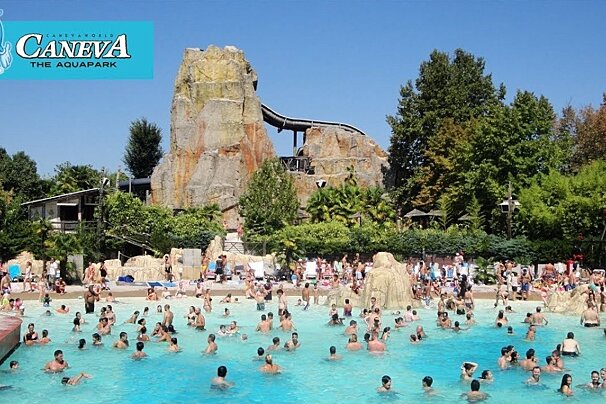
This site has three major events: Caevaworld Movieland Hollywood Park, a theme park based around film sets, The Aqua Park, which is a water park full of slides, wave simulators and a Peter Pan style pirate's lagoon, and Night & Fun - the evening's entertainment which consists of Medieval show dinners, a rock star restaurant all you can eat and a night festival disco.
This 18-hole course was built in 1928 in the historic Royal Park of Monza. The three paths of the course are set within an ancient wood, requiring the player to think carefully about each shot, with a focus on precision in the front 9 and long shots on the back 9.
Heading up the hills from Lake Garda is the beautiful Monte Baldo region of sloping forests, lush greenery and flowing rivers.
This large lake, on the eastern side of Milan, was originally built for Mussolini as an airport for seaplanes. Now it is a park for sporting activities and a summer meeting place. Boasting a beach, swimming pools and plenty of open space for walking and cycling as well as other team games, its bursts into life in summer and is a perfect family afternoon with a picnic on a hot day.
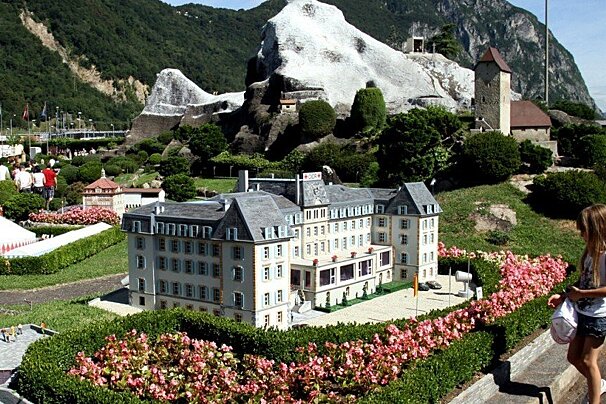
If you want to see an overview of Switzerland in miniature, then this is the place to come.