Swissminiatur
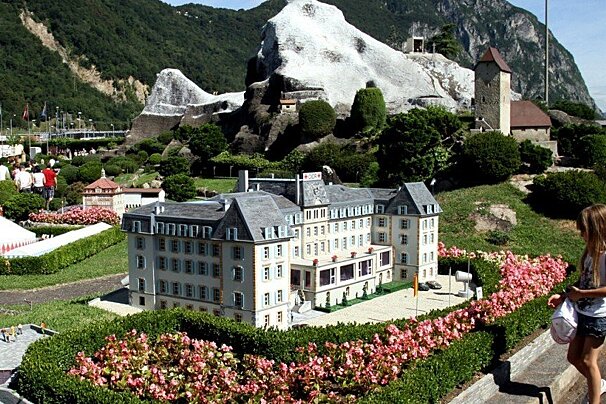
If you want to see an overview of Switzerland in miniature, then this is the place to come.

© Locanda San Vigilio
Luxurious waterfront small hotel.
Sitting directly on the waterfront, this locanda has been a guest house since the 1500s and today has just seven rooms and seven suites offering a luxurious and private stay. It has a lovely pool overlooking Lake Garda and an excellent traditional Italian restaurant where dishes are seasoned with San Vigilio's own extra virgin olive oil.
If you want to see an overview of Switzerland in miniature, then this is the place to come.
This 18-hole course was built in 1928 in the historic Royal Park of Monza. The three paths of the course are set within an ancient wood, requiring the player to think carefully about each shot, with a focus on precision in the front 9 and long shots on the back 9.
This round trip by boat and train, taking in the main sights and towns is a fantastic way of seeing the area around Lake Maggiore.
This 18-hole, par 72, golf course was designed by Franco Piras and realised in 2002.
The great little trains of Orta tour around this part of the lovely lake, taking in the main square of Orta San Giulio, the holy mountain of Sacramonte and its chapels, and the painted village of Legro. It's a great way of seeing this outcrop of land and is a big hit with children.
Monte Tamaro rises 1,961 metres above the lake and in this beautiful hilly area there are plenty of wonderful trails and hikes. Notably it is the starting point for the Tamaro-Lema hike. This peak is also worth visiting for the contemporary and innovative Santa Maria degli Angeli church designed by Mario Botta and painted by Enzo Cucchi. It sits on the edge of the hillside with amazing views. There is also an adventure park and mountain bike trails. Something for everyone.
This elegant and sophisticated restaurant is located in a luxury hotel right in the heart of Milan and has been awarded a Michelin star. They serve traditional Italian dishes with innovative touches using local fresh ingredients.
Located at the luxury Excelsior Gallia Hotel, this rooftop restaurant boasts a menu created under the consultancy of three-Michelin starred chefs Enrico and Roberto Cerea and the Lebano brothers. They serve modern Italian cuisine with a focus on the Lombardy region.
Il Baretto has been running for over fifty years, delighting the great and the good of the city for half a century. The sophisticated, old English club house decor is host to a refined menu taking cues from Milanese and international cuisine.
The elegant style and furnishings, the neoclassical pieces of art decorating the walls and the hand-painted high ceiling is a dramatic yet fitting setting for the fantastic food of the Palazzo Parigi restaurant. And when the weather is fine, the relaxed atmosphere of the private garden terrace provides an alternative atmosphere for visiting diners.
Michelin-starred experience that draws on the experimentation of the Venissa culinary approach. The enchanting decor completes the tone for dining in a very unique setting.
The 2-Michelin-starred Seta restaurant located in the Mandarin Oriental Milan hotel is a new kid on the block for the Milanese restaurant scene. An open-plan kitchen gives guests a peak of how the stunning dishes are prepared and a more complete experience to their choices.
Located in the historic centre of Milan, in front of the Galleria Vittorio Emanuele II, this is one of Milan’s hottest and trendiest bars in the city at any time of the day.
This small quirky cocktail bar has a "fusion" feel combining local furniture with Eastern, African and Caribbean styles to create a global feel.
Meaning "heart", this vibrant, friendly, atmospheric spot is worth seeking out down a side street for its changing interior, DJ sets and mixed clientele.
This trendy bar and restaurant combines two of the most traditional yet innovative Italian brands: Dolce & Gabbana and Martini. This is a unique place where you can have lunch, aperitivo or dinner inspired by Sicilian cuisine.
With a number of different dancefloors, and known for attracting classic 80s pop icons, this is a fashionable gay-friendly club with a selective crowd.
This club was created by the famous fashion stylist Roberto Cavalli and is located within the largest city garden, Parco Sempione.
This 52-metre tower rises up in Bergamo's old town offering a strategic view across the town and the surrounding area. Apparently, it was originally 64 metres high but the top few metres were removed in the 19th century due to the risk of collapse.
With 688 hectares, Monza Park is Europe's fourth largest enclosed park. Located on the north of the city, the park includes some of Monza's most important sights such as the Royal Palace and the famous Formula 1 circuit.
With origins in the late 6th century, the cathedral of Monza is one of the most important religious buildings in Italy. At this museum, you will find stunning medieval pieces and discover more about the history of this town.
Founded in the 6th century, the cathedral of Monza, also known as basilica of Saint John the Baptist (San Giovanni Battista) is Monza's most important religious building.
'Arengario' derives from the Latin arengarius which means 'gathering place'. Situated very close to the cathedral, its presence symbolised the continuous fight for power among the religious and civil forces of Monza.
Built at the request of empress Maria Theresa of Austria as a summer residence for her son Ferdinand, this royal palace was designed to imitate Lombard villas. The palace and its extensive gardens are now part of Monza Park.
The city of Bergamo is perched atop a hill just within a 30-40 minute train or car ride from Milan. The fourth largest city in Lombardy, it is located at the foot of the Alps.
Located just within 15 kilometres north of Milan, this big but picturesque town, the third largest in the Lombardy region, has been transformed from a mainly industrial trade centre to a popular spot for good cuisine, pretty squares and of course the F1 Gran Prix.
High up above the lakes is the village of Arcumeggia in the mountains. It is famous because in 1956 the local tourist office decided to ask important Italian painters to fresco the walls of the town's stone cottages.
The lovely town of Angera dates back to Roman times when it was an important stopping point for boats transferring their wares to the road, and vice-versa. Sitting high above the town is the Rocca Borromeo, a fortress dating back to the 11th century.